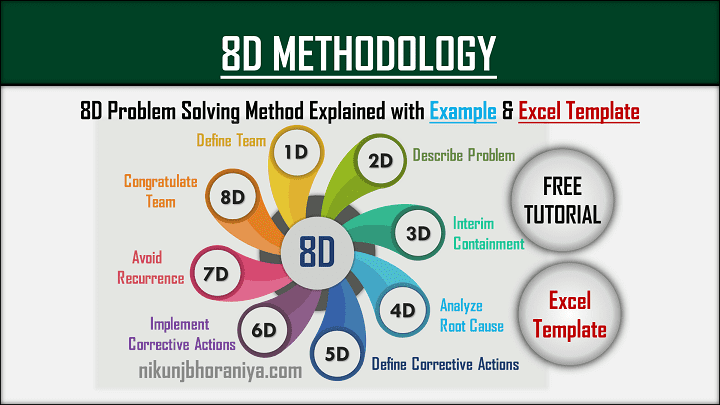
8D Problem-Solving Methodology (Eight Disciplines of Problem Solving)
The 8D (Eight Disciplines) Problem-Solving Methodology is a structured, team-based approach used in Quality Control (QC) to identify, analyze, and permanently resolve issues in manufacturing and business processes. It is widely used in industries such as automotive, aerospace, and manufacturing to improve product quality and prevent recurring defects.
The 8D Steps (Disciplines):
D1 – Establish the Team
- Form a cross-functional team with the necessary expertise to address the problem.
- Assign roles and responsibilities to ensure collaboration.
D2 – Describe the Problem
- Clearly define the problem using data and facts.
- Use the 5W2H method (Who, What, Where, When, Why, How, How much).
D3 – Develop Containment Actions
- Implement temporary actions to stop the problem from escalating.
- These are short-term solutions to protect the customer.
D4 – Identify the Root Cause
- Use tools like 5 Whys, Ishikawa (Fishbone) Diagram, or Pareto Analysis to find the main cause of the issue.
- Verify root causes through data analysis and testing.
D5 – Develop Permanent Corrective Actions (PCAs)
- Identify long-term solutions that eliminate the root cause.
- Use techniques like FMEA (Failure Mode and Effects Analysis) to evaluate solutions.
D6 – Implement and Validate the Corrective Actions
- Apply the selected permanent solutions and monitor their effectiveness.
- Use KPIs (Key Performance Indicators) to track improvements.
D7 – Prevent Recurrence
- Modify processes, update work instructions, and provide training to prevent the issue from happening again.
- Implement standardization and continuous improvement measures.
D8 – Recognize and Celebrate Team Success
- Acknowledge the team’s effort and success in resolving the problem.
- Document lessons learned and share best practices across the organization.